



What is the minimum order quantity for custom boxes
If you’ve been looking for custom packaging, you’ve probably run into this question more than once. You reach out to a manufacturer, send over your specs, and the first thing they ask is “what’s your quantity?” You give them a number, and sometimes they say yes, sometimes they say no, and sometimes they quote you a price that makes you wonder if they even want the job.
I’ve been on the manufacturing side for years, making custom paper boxes, rigid gift boxes, kraft packaging—you name it. And I can tell you: MOQ isn’t just a number manufacturers pull out of thin air. There’s logic behind it. But there’s also more flexibility than most buyers realize, if you know where to look and what to ask.
Why manufacturers have MOQs in the first place
Let me be honest with you. When a packaging factory sets a minimum order quantity, it usually comes down to three things.
First, materials. Paperboard, kraft paper, specialty papers for luxury magnetic gift boxes—these come in large rolls or sheets from mills. If we have to order a custom paper stock with your specific color or texture, the mill itself has minimums. So the factory’s MOQ often reflects what they have to buy to even run your job.
Where can I find reliable packaging box manufacturers in China
Second, setup time. Custom packaging isn’t like printing a document at home. For custom paper boxes with a logo, we have to make printing plates, cutting dies, foil stamping dies if you want that premium look. That setup takes hours. If the order is too small, the setup cost per box becomes unreasonable—for you and for us.
Third, machine runs. A rigid box line or a folder gluer works best once it gets going. Stopping and cleaning for a tiny run costs time and increases waste. Most factories have a sweet spot where the machine runs efficiently, and that often translates into the MOQ you see.
Typical MOQ ranges you’ll encounter
This varies by factory and by product type, but here’s a rough picture based on what I see in the industry.
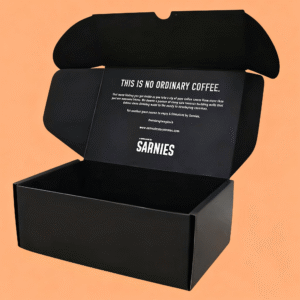
For simple custom kraft paper packaging boxes with basic printing—no foil, no complex structure—you might find suppliers willing to go as low as 500 to 1,000 pieces. Some smaller shops will even do 300 if they’re slow and you’re flexible on timing.
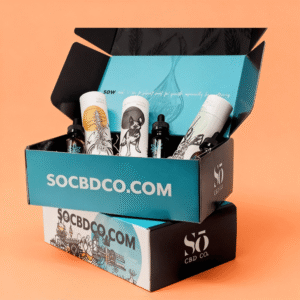
For rigid gift boxes, especially those with magnetic closures, wrapped lids, and custom logos, MOQs are usually higher—think 1,000 to 2,000 pieces as a starting point. The reason is simple: rigid boxes are more material-intensive and require more hand assembly. The setup cost is significant, so manufacturers need enough volume to spread that cost out.
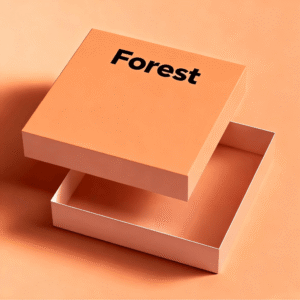
For luxury magnetic gift boxes with high-end finishes like leatherette wrapping, hot foil stamping, or embossing, you’re typically looking at 2,000 pieces and up. These are specialty items that require dedicated tooling and experienced workers who know how to handle delicate materials.
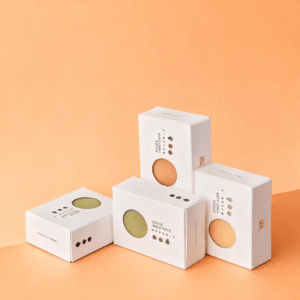
For custom foldable gift boxes—the kind that ship flat and pop up—MOQs can be more flexible. These are often simpler to produce, so some manufacturers will work with 500 to 1,000 pieces, especially if it’s a standard size and just custom printing.
Where the flexibility comes in
Here’s what most manufacturers don’t put on their websites: MOQs are negotiable, depending on the situation.
If you’re a startup or testing a new product line, some factories will work with you on a smaller run if you’re willing to use standard sizes and common materials. For example, instead of cutting a custom size for your rigid gift boxes wholesale order, you pick a size the factory already has dies for. That eliminates die-cutting setup costs and can bring the MOQ down significantly.
Similarly, if you’re flexible with lead time, a manufacturer might run your small order alongside a larger one to save on setup. You wait a bit longer, but you get a lower MOQ and better pricing.
I’ve also seen buyers combine multiple box styles into one order to hit MOQ requirements. Maybe you need 500 rigid boxes and 500 folding cartons. If the factory produces both, they might count the total quantity across both items to meet their minimum.
What to ask beyond the MOQ number
When a supplier gives you their MOQ, don’t stop there. Ask a few more questions—they’ll tell you whether the supplier is genuinely trying to work with you or just reading from a policy sheet.
Ask: “Is that MOQ per design or can I combine different boxes?” Some factories will allow mix-and-match within the same material and process.
“What’s the price break at higher quantities?” This helps you understand whether the MOQ is truly the minimum to get production going, or just a starting point for reasonable pricing.
That might still work for you if you need samples or a small launch batch.
A word of caution on “no MOQ” suppliers
You’ll see some suppliers advertising “no minimum order quantity” on platforms like Alibaba. Be careful with these. In my experience, a supplier that claims no MOQ is often one of two things: a trading company that will piece together orders from different factories (which adds cost and complexity), or a manufacturer that charges such high per-unit pricing that they don’t care about volume.
There’s also a quality risk. A factory that specializes in small, one-off runs may not have the process control to deliver consistent quality when you scale up later. If you start with a no-MOQ supplier and then need 10,000 pieces for your next order, you might find yourself switching manufacturers entirely—which means new tooling, new samples, new everything.
The sweet spot for most buyers
From what I’ve seen working with brands of all sizes, the sweet spot for custom boxes—whether it’s custom paper boxes with logo, gift boxes, or rigid packaging—is usually around 1,500 to 3,000 pieces. At that volume, you get reasonable per-unit pricing, the manufacturer can use efficient production methods, and you’re not sitting on so much inventory that cash flow becomes a problem.
If you’re just starting out, look for manufacturers who are willing to grow with you. A good supplier will work with you on that first smaller order if you show that you’re serious about scaling up later. They’re not just looking at the one order—they’re looking at whether you could become a long-term partner.
What is the minimum order quantity for custom boxes
What we do on our end
At our shop, we’ve learned that every client is different. A startup launching a luxury skincare line needs a completely different MOQ structure than an established retailer doing seasonal gift boxes. So we usually start with a conversation: what’s your timeline, what’s your budget per unit, what’s your storage situation. From there, we figure out what actually makes sense.
Sometimes that means running a smaller batch using stock materials and standard tooling. Sometimes that means setting up a full custom run with all the bells and whistles because the volume justifies it. The point is, the MOQ shouldn’t be a barrier—it should be a starting point for figuring out how to make your packaging work for your business.
If you’re currently shopping around for custom packaging boxes, gift boxes, rigid boxes, or kraft packaging, and you’re running into MOQ issues, reach out. Tell me what you’re trying to do—quantity, box style, budget, timeline. I’ll give you a straight answer on what’s realistic and how we might be able to make it work.
Written from a packaging manufacturing facility in China, where we’ve been making custom paper boxes, rigid gift boxes, and kraft packaging for brands around the world.