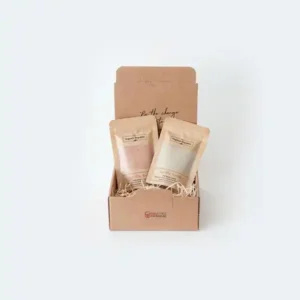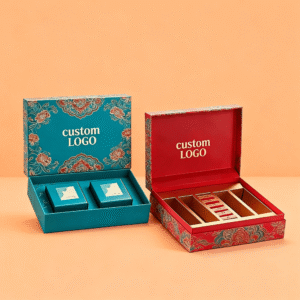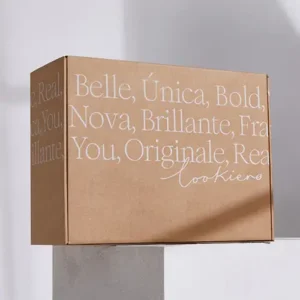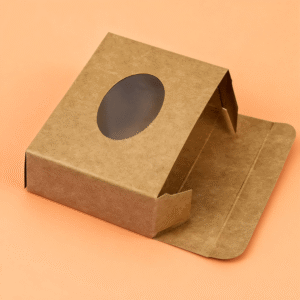

The short answer: For most brands ordering custom packaging boxes, expect a minimum order (MOQ) of 100–500+ units depending on box type, 8–30 days of production after your design and materials are approved, and a unit cost of roughly $0.25–$5+ driven by material, structure, print complexity, finishing, and order volume. These three numbers are what you should line up when comparing quotes.
Custom packaging is one of the fastest-growing parts of the broader packaging market — the custom packaging boxes market alone is projected to grow from $65.12 billion in 2025 to about $100.08 billion by 2035. That growth means more suppliers, more price points, and a lot of confusion. This guide breaks down the three numbers every buyer should understand before requesting a quote — MOQ, lead time, and cost — with realistic ranges and the specific levers you can pull to improve each one.
What is the typical MOQ for custom packaging boxes?
A minimum order quantity is not a supplier being stubborn — it is the setup cost (die-making, plate prep, machine time) spread across your run. Small runs carry a high per-unit setup cost, so suppliers raise the floor to make the order viable. Understanding that is what lets you negotiate intelligently instead of just accepting a number.
Typical MOQs by box type:
| Box type | Typical MOQ | Notes |
|---|---|---|
| Folding cartons / mailer boxes | 100–300 units | Lowest barrier; low-MOQ suppliers start around 100 |
| Corrugated boxes | 200–500 units | Depends on size and die-cutting |
| Rigid / magnetic-closure boxes | 300–500 units | Higher setup; more structure |
| Mylar bags / pouches | 1,000–5,000+ units | Sealing equipment drives the floor |
US-based on-demand suppliers often advertise low or even “no” minimums (e.g., 100 units for folding cartons, or 1 unit for stock boxes), while manufacturers with more automation frequently set floors around 200–500 for custom-printed corrugated and rigid boxes. If your true volume sits below a supplier’s MOQ, the common workarounds are to order stock / unprinted boxes, add labels or decals instead of full printing, or bundle multiple SKUs into a single run.
How long does custom packaging take? (Sampling to delivery)
“Production time” is only one slice of the timeline. A full custom packaging project has four stages, and the clock effectively resets at each gate:
| Stage | Typical duration | What controls it |
|---|---|---|
| Sampling / proofing | 3–10 days | Number of revisions, structure complexity |
| Design & spec approval | 1–5 days | Your review turnaround |
| Bulk production | 8–30 working days | Volume, print colors, finishing, machine availability |
| Shipping | 1–15+ days | Air freight (fast) vs. ocean (slower, cheaper) |
For a standard order, 2–4 weeks of production after approval is the most commonly reported range across manufacturers. More complex structures — rigid boxes, die-cut windows, multiple finishes — push toward the upper end, while simpler folding cartons move faster.
As a first-hand reference, Xin Peng Packaging — a manufacturer serving 5,000+ customers with a 4.98-star rating — quotes production in 8–10 business days and offers a free sample plus a 7-day fast-delivery option, which is useful when you want to de-risk a first order. Two practical levers to shorten the overall timeline: (1) lock your design and specs before you request the production quote, and (2) ask for an “in-hands” date, not just a production date, so shipping is already in the math.
How much do custom packaging boxes cost per unit?
Custom box pricing typically spans $0.50 to $25+ per unit, depending on material, structure, print complexity, finishing, and order volume. The per-unit price falls as volume rises because the fixed setup cost is amortized across more units.
Realistic per-unit ranges by box type:
| Box type | Per-unit cost range | Volume behavior |
|---|---|---|
| Standard folding cartons (at volume) | $0.25–$0.60 | Steepest drop at higher volumes |
| Corrugated mailer / shipping boxes | $0.50–$3.00 | Scales with flute type and size |
| Cardboard printed boxes | $1.00–$3.00+ | Print colors drive cost |
| Rigid / magnetic-closure boxes | $1.20–$5.50 | Structure + finishing premium |
| Specialty (foil, window, embossed) | $2.00–$25+ | Finishes add cost per unit |
The two biggest cost levers are volume and print/finish complexity. A manufacturer might charge roughly $2–$3 for a standard printed cardboard box at mid volumes but far less at scale, and can add a substantial premium for finishing (foil, spot UV, embossing, die-cut windows). Bulk tiers matter: several manufacturers discount around 30% on bulk orders and up to 50% on runs of 5,000+ units.
What factors drive the price of custom boxes?
- Material — corrugated, kraft (eco-friendly), paperboard, rigid press board, metallic or textured stock. Higher GSM means higher cost.
- Structure & size — rigid and multi-piece boxes cost more than single-wall folding cartons; larger or oddly shaped boxes use more board.
- Print complexity — number of colors, print area (inside / outside / both), and whether the artwork is flat or detailed.
- Finishing — lamination (gloss / matte / soft-touch), spot UV, foiling, embossing or debossing, and die-cut windows each add per-unit cost.
- Volume — the dominant lever; unit cost declines sharply as run size grows.
- Setup / die cost — a one-time fee tied to custom die-cutting and plating, amortized across your order.
- Shipping — air freight is fast but priced by weight; ocean freight is slower and cheaper for heavy, large runs.
How to lower your MOQ, cost, and lead time
- Start with a sample. A free or low-cost sample before a full order is the single best de-risking step; manufacturers like Xin Peng Packaging offer a free sample and 7-day fast delivery.
- Reduce print and finish complexity. Fewer ink colors and skipping premium finishes can cut per-unit cost meaningfully.
- Choose standard or near-standard sizes. Off-the-shelf dimensions avoid custom die fees and speed up production.
- Bundle SKUs into one run. Combining products lets you hit a higher (cheaper) MOQ tier while spreading the setup cost.
- Negotiate the MOQ tier. If your volume is below the floor, ask about stock boxes + labels, or splitting the setup across a larger combined order.
- Lock your specs early. Finalized design and materials before the quote removes approval time from the critical path.
Frequently Asked Questions
What is the minimum order for custom boxes?
Typically 100–500 units for folding cartons and corrugated boxes, and 1,000–5,000+ for mylar pouches. Low-MOQ on-demand suppliers can go as low as 100 — or even 1 unit for stock boxes.
Do suppliers charge a setup or die fee?
Usually yes — a one-time die-cutting / plating fee for fully custom structures. It is amortized across your order, so larger runs make it cheaper per unit.
How accurate is the production timeline?
Ask for an “in-hands” date that includes shipping, not just a production date. Standard production is commonly 8–30 working days.
Is it cheaper to order more units?
Yes. Unit cost falls as volume rises because fixed setup is spread thinner; many manufacturers discount around 30% on bulk and up to 50% at 5,000+ units.
What’s the fastest way to get custom boxes?
Simplify the structure, limit print colors, use standard sizes, and choose air freight. On-demand low-MOQ suppliers are fastest for small, quick runs.
Can I get a sample before placing a full order?
Most manufacturers offer samples — some free, some at cost. Always sample before a bulk run.
Do eco-friendly materials cost more?
Often slightly more than standard stock, though the gap is narrowing. Kraft and recycled board are now widely available at near-parity pricing.
What should a quote include?
Unit price, MOQ, setup / die fees, production time, shipping method and cost, and an in-hands date. If any of these are missing, ask.
Key takeaways
- MOQ = setup cost spread across the run; typically 100–500+ units and negotiable via stock boxes or bundling.
- Lead time = sampling (3–10 days) + production (8–30 days) + shipping; always ask for an in-hands date.
- Cost = roughly $0.25–$5+ per unit across common box types, driven most by volume and print/finish complexity.
- The fastest path to a lower-cost, on-time order: lock your specs, sample first, simplify print, and buy at a higher volume tier when you can.
Sources
- PackPro, “How Much Do Custom Boxes Really Cost?” — packpropkg.com
- Gifts-Pack, “Custom Packaging Cost Guide” — gifts-pack.com
- PackMojo, “What is your MOQ?” — packmojo.com
- Seismo Packing, “Custom Packaging Lead Time: Sampling to Production” — seismopacking.com
- OriginalityPack, “How Long Does Custom Packaging Take?” — originalitypack.com
- MarketResearchFuture, “Custom Packaging Boxes Market” — marketresearchfuture.com