
The honest answer is that “best” is hiding two different jobs. A box that lives on a café shelf and a box that rides a parcel van are not making the same decision; the food itself changes the answer again.
The short version: dry goods want a paperboard tuck end box, anything that leaks fat or water needs a barrier between the product and the board, and anything that travels wants corrugated. What follows is where those lines fall and where the extra cost counts.
The two questions that decide the answer
Most confusion around food packaging comes from comparing boxes that are not doing the same job. Two questions decide it.
The first question is where the box finishes its life. If it sits on a shelf, in a basket or in a takeout bag, it is doing display work: look good at a meter, open easily, survive light handling. If it also goes through the post, it has to take stacking, drops and vibration, which changes the material more than the design.
The second question is what the food does. Does it release fat? Does it steam? Is it packed chilled, in which case condensation arrives the moment the temperature equalises? A biscuit and a glazed doughnut can sit in the same design file and behave nothing alike in the same box.
Answer both and the “best” box stops being an opinion. It becomes a specification you can hand to a supplier for a straight quote.
Dry goods and the tuck end box
For dry food sold on a shelf, the tuck end box is the workhorse. It is cut from a single sheet of paperboard, creased and die-cut so the whole box folds flat, and the end flaps tuck into the body to hold it shut. No tape, no visible glue, and flat blanks take up almost no space until assembly.
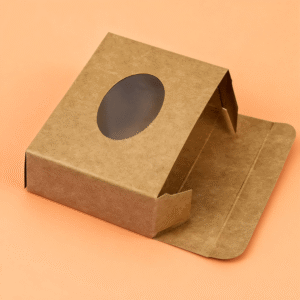
The variants follow the product. A straight tuck end suits lightweight retail items and is the style under most chocolate bars and snack packs. A reverse tuck closes the flaps in the opposite direction, strengthening the seal on heavier packs. An auto lock bottom assembles itself when the base is folded, so the box stands without a weak glued corner. If you want the buyer to see the food first, a display tuck box adds a window, covered with PET or PVC film, left open, or cut in a custom shape.
Chocolate, chips, tea, spices, granola and bakery lines all live comfortably in this family, and the tuck box guide on this site lists food-safe materials and coatings for them, the line you want on your specification before anything is printed. Four-colour CMYK carries photography, a Pantone spot colour keeps a brand shade exact, offset suits a long run and digital the short one. The tuck box range shows the styles side by side.
Greasy and moist food: the barrier you cannot skip
Paper absorbs. That is the property that makes board easy to print on, and the reason a box that works for dry goods fails quietly for anything wet or oily. Fat from a pastry or a sauced snack wicks into the fibres and blooms into dark patches on the outside within hours. Moisture does different damage: a damp product softens the board, the fold memory is lost, and a box that stood on the shelf on Monday sags by the end of the week.
There are three ways to keep the box in the design and put a barrier where the contact happens. The cheapest is a liner or a bag inside the box: the food touches the liner, the box touches nothing, and the outside can be any board you like. The middle option is a coated inner face, so the barrier sits on the surface the food meets rather than the outside. The third is a film or barrier board for genuinely wet products, which costs more because it is a different substrate, not a different finish.
Each option adds a production step and shows up in the quote, fine as long as the decision is made at the sample stage rather than after the first carton arrives with grease through the lid. Tell the supplier what the product releases rather than what it looks like. For baked goods, the bakery boxes page shows how these barriers are handled in practice.
When the box has to travel: mailers and corrugated
The moment the food leaves your hands, the material question outranks the design question. A paperboard tuck box is not built to take a sorting machine, and the honest upgrade is corrugated. The fluted layer carries the crushing load a plain board cannot, and a corrugated mailer or a roll end tuck top corrugated box holds its shape under stacking. The roll end tuck top style is the general case; the three flap lock variant targets mid-weight.
Inside is where a lot of shipped food fails, so the inserts matter as much as the walls. Corrugated and chipboard dividers hold two or three items in separate seats, so a jar and a bag do not slide into each other. EVA and EPE pads absorb the impact on fragile contents, and a moulded pulp tray is the paper-only option for brand-forward lines. A kraft mailer suits dry shipped goods, because the brown liner hides the scuffs and tape marks a white board would show on a long route.
These boxes also ship flat and fold at your bench, so the warehouse footprint is a fraction of what assembled boxes take. If you fulfil from a small space, that alone can settle the style question. The mailer box range and the kraft mailer line show what is available for shipping food.
Kraft, white board, or coated: where the money goes
The substrate is where most of the price in a food box lives, and the three families behave differently in ways photographs hide.
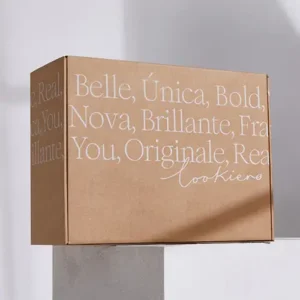
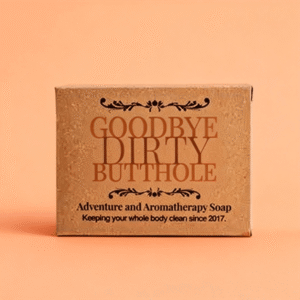
Kraft is made from wood pulp with the fibre left largely unbleached, which is where the brown comes from. It is uncoated, so ink sinks into the sheet and colours read muted. For natural and organic food lines that is a feature rather than a bug, and our kraft tuck top boxes are listed as made from 100% natural, chemical-free material, fully recyclable and safe for direct food contact in plain form for dry items. Kraft accepts foil stamping and raised ink printing across a wide spread of weights. The trade-off is colour. Full-photography designs and pale brand shades fight the brown substrate, and light inks usually need an opaque white underlay, an extra pass that is the most common reason a kraft job costs more than the artwork suggested.
Bleached white board is the clean canvas: predictable full-colour print and crisp fine text, which is why a snack pack with a photographic front panel is usually on it. It is not cheap either, and it is the wrong choice when the whole point is the natural look.
If sustainability is part of the brief, check this: the brown tone tells you nothing about the fibre, which can be virgin or recycled pulp. What is verifiable on this site is the FSC chain of custody certificate, COC number SGSHK-COC-330577, covering the paper sourcing. The kraft box range is where to start if that is your direction.
Finishes for food boxes: what is worth paying for
One habit is worth breaking early: most finishes on a food box protect the print, not the food. The barrier money is the liner or the coated inner face. The outside finish is about how long the graphics stay sharp and how the box feels in hand.
The sensible default is an aqueous coating. It is a fast-drying water-based finish, gloss or matte, that keeps fingerprints and light scuffs off the surface. Varnish, applied on press, does similar work at a lower cost when the design does not need moisture resistance. Lamination goes further: a film overlay that resists moisture, scuffs and handling wear, right when the box moves through a retail network. Anti-scratch and soft-touch silk laminations sit at the premium end. The soft-touch finish is purely a feel statement, and it costs real money without doing anything for the product inside.
Spot UV is the one finish to spend on deliberately or skip entirely. A high-gloss logo or window frame against a matte body is a strong shelf effect and costs a single extra pass. Holographic foiling and embossing are the luxury register; they make sense on a gift line where the box is kept, not on a snack opened over the sink. The rule: spend where the customer reads and touches, keep the rest for the barrier layer.
Questions about food packaging boxes
What is the best box for dry food like chocolate or snacks?
A tuck end box is the usual answer. A straight tuck end suits lightweight retail items, a reverse tuck adds seal strength for heavier packs, and an auto lock bottom folds itself into a stable shape. A window cutout lets the buyer see the product, and the board weight should be matched to what the box has to carry.
Can food go directly into a kraft box?
Plain kraft is made from natural pulp and is listed on this site as safe for direct food contact for dry items. For anything greasy or moist, add a liner or a coated inner face, because uncoated board absorbs fat and water.
How do I keep shipped food from arriving crushed?
Move the product into a corrugated mailer or a roll end tuck top corrugated box. These are engineered to hold their shape under stacking and handling, and corrugated dividers or moulded pulp inserts keep the contents in their seats. The boxes also ship flat, which keeps your own storage small.
How do I find the minimum order quantity and lead time?
Both vary by box style, size and level of customization, so the reliable answer comes from the supplier with your exact specification in hand. Send the product weight, the finished dimensions and any barrier requirement, and ask for a quote that states the MOQ and a guaranteed in-hands date.
If your product sits on a line above it, between dry and greasy or between shelf and shipping, do the specification work carefully. It is the part a supplier can price against, and the part a customer can see. The food boxes range and the product boxes overview cover the styles for comparison.