
The word shows up in product specs, and it seems to mean three different things at once. A mailer called biodegradable in one supplier’s deck may carry a plastic film window, and a rigid gift box called biodegradable in another may use a PET tray for its insert. Both boxes are mostly paper. The difference sits in the parts you cannot see until the box is taken apart, and that is where the word does its most confusing work. What follows is what biodegradable means, how it differs from compostable and recyclable, which components earn the label, and how to verify it.
A box is a bundle of components, not one material
Most of the confusion starts from treating a finished box as if it were a single substance. It is not. Even a simple printed carton is at least six things at once: the board or flute, the ink, the coating, the flap adhesive, any tape, and whatever holds the product inside. Each has its own end of life, and biodegradable can only ever apply to the ones where it is actually true.
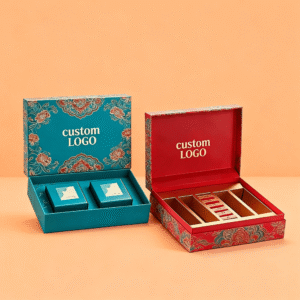
This is why two boxes that look identical can give opposite answers to the same question. On this site, a tuck box may be built from kraft paperboard with plant-based inks, a paper-dominant stack, and the same style can be ordered with a clear PET window and a foam insert, which changes the end-of-life story completely. The structure is identical. The claim is not. The honest question is never whether the box is biodegradable, but which of its components are, and what happens to the rest. That reframing forces the answer down to a parts list instead of a label.
What “biodegradable” actually means
Biodegradable has a technical definition that is less exciting than the marketing version. It means microorganisms can break the material down, over time, into water, carbon dioxide or methane, and new biomass. The definition does not say how fast or in which environment, and those two omissions are where the word goes wrong.
Its two confused neighbours are compostable and recyclable, and they are different claims. Compostable is the stricter one: the material must break down at a defined rate under composting conditions and must leave nothing behind that harms the compost, which is why serious compostability claims tie to a named standard rather than an adjective. Recyclable points the other direction: the material is meant to be collected, reprocessed and made into material again, not to break down at all. Paper is the rare material that earns all three adjectives, which is why it dominates this conversation. Uncoated paperboard can be recycled into board again, and if it is never recycled, microbes will eventually take it apart. The trap is assuming that because a paper box is biodegradable, every part of it is. For a printed box both properties are real, and they apply to different components.
Where the breakdown actually happens
A material biodegradable in a compost facility may barely move in a landfill, and that difference is the whole story. Composting is industrial and fast: heat, moisture, oxygen and dense microbial activity do in weeks what takes a paper box years on its own. Home compost is the same chemistry at a slower, cooler pace, and a thick board can still take a long time. In soil or surface water, breakdown is slower again and often incomplete, with the outer fibres breaking down while the core survives.
A landfill is the environment where the word biodegradable stops being useful. Conditions there are cold, dry, compacted and, most importantly, anaerobic. Paper does eventually break down anaerobically, but slowly enough that the claim adds nothing, and the by-product is methane rather than clean carbon dioxide. This is why a quote that says biodegrades in months without naming the environment is not an answer. When you evaluate a biodegradable option, pin the claim to a place: a composting facility, a home compost bin, or simply eventually. If the supplier cannot say which, the word is doing decorative work.
The options that hold up for a printed box
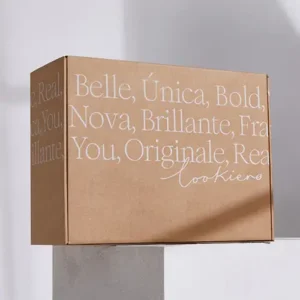
Look at the actual menu of components that earn the label. The board itself is the biggest item. Uncoated kraft paperboard is the workhorse: the kraft range is built around tuck tops and mailers that need no coating to look finished, in white, brown or black. Natural kraft corrugated, in E or B flute, is the shipping version of the same story, and the mailer pages show it as the default. Grey chipboard, the base of many rigid boxes, is made from recycled paper pulp, so a premium box can be as paper-dominant as a mailer.
Inserts tell the same tale at a smaller scale. Molded pulp trays are the standard paper answer to the foam insert, and the rigid box options list cardboard and molded pulp alongside plastic trays rather than instead of them. Around the box, water-based inks and soy or vegetable inks are the plant-based printing choices, and a water-based matte or gloss finish covers the surface without adding a film layer. Paper tape keeps the whole stack in one material family. None of these are exotic; they are the normal range of a packaging factory. The biodegradable version of a box is usually the default version, with the non-biodegradable parts left out.
The parts that quietly fail the claim
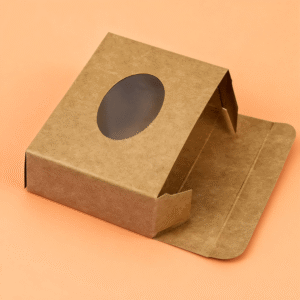
The other half of the menu is the half a spec sheet may not volunteer. A protective film overlay is a thin plastic film applied over the surface for moisture and scuff resistance. It is not biodegradable, and it is the most common reason an otherwise paper box stops being a paper box. Clear windows in PET or PVC do the same for a tuck box that needs to show the product. Foam inserts and PET trays hold products rigidly and cheaply, and neither breaks down on any useful timescale.
The trade-off is real, and it is worth making explicit. A PET window can be the difference between a retail box that sells itself and one that does not. A film finish can be what keeps a box through a wet container. For some products those components are doing actual commercial work, and the right move is to keep them and stop calling the whole box biodegradable. For many others, the component is habit rather than function: a window on a mailer that is never displayed, a film finish on a box that ships dry. That is where the money is, and where the claim becomes true, because removing a habitual plastic component costs less than having the claim questioned later.
Biodegradable or recyclable: pick the goal first
Before comparing options, decide which end of life the box is heading for, because the right material differs. If the box is meant to be recycled, the goal is a single-material stack that moves cleanly through a paper recycling stream, and biodegradability is a footnote. Mono-material paper with water-based inks is the answer. If the box is meant to be composted, the goal is stricter: every component has to meet a compostability standard, not merely be natural, since the process has time and residue limits. Most product packaging discarded at home or in a shop is headed for neither, but for mixed waste, and in that environment no green adjective is doing anything except costing money.
This is where the spending decisions fall out. Paying for a certified compostable component makes sense when the disposal route is real, which is true for some food and personal care contexts and not most others. Paying for biodegradable as a printed claim, on a box that will sit in mixed waste for years, buys a word and nothing behind it. The cheapest honest upgrade for most businesses is not a new material. It is removing the film, the foam or the window that breaks the recycling claim, so that a mostly paper box becomes a fully recyclable one. That is a smaller ask of the supply chain, and a stronger statement.
How to verify what a supplier means
A claim is worth the questions you put to it. The first question is component-level: ask for a material declaration for the exact style, not the category. Paper box with window is a category; the declaration should name the board, ink, coating, window film and insert as separate lines, each with its own material. The second question is about the route: which environment is the claim made for, a composting facility, a home compost bin, or no specific environment at all? A supplier that answers it breaks down naturally, with no location, is repeating the label. The third question is about the standard: if compostability is the claim, which certification is it based on, and can the certificate be seen?
For recycling claims the check is simpler: is every component in the stack the same material family, and can the recycling stream where the box will actually be discarded take it? Two boxes, one with a film window and one without, are often quoted at close prices. The second is the only one that survives these questions with its claim intact. The product pages show the styles a supplier should be able to specify this way, and the sustainability article covers the operating checklist behind that logic.
Questions that come up with biodegradable packaging
Are paper boxes biodegradable?
Uncoated paperboard, kraft and corrugated will all eventually break down, but the speed depends on moisture, oxygen and microbes. Coatings, film windows and foam inserts do not.
Is biodegradable the same as compostable?
No. Compostable sets a rate and a residue limit under composting conditions and is usually tied to a named standard, while biodegradable only says that microorganisms can break the material down. Serious compostable claims are biodegradable. Most biodegradable claims are not compostable.
Do biodegradable boxes break down in a landfill?
Very slowly, and not cleanly. Landfills are cold, compacted and anaerobic, so the breakdown the word promises happens on a timescale that defeats the point, and the by-product is methane rather than carbon dioxide.
Which is better, recyclable or biodegradable packaging?
It depends on where the box ends up. If it will be collected and recycled, a mono-material box with no film or foam is the stronger choice. If it will be composted, certified compostable components are. In mixed household waste, neither does much.
How do I check a supplier’s biodegradable claim?
Ask for a component-level material declaration, ask which environment the claim is made for, and if it is a compostability claim, ask to see the standard. A supplier that can answer all three is describing the box.