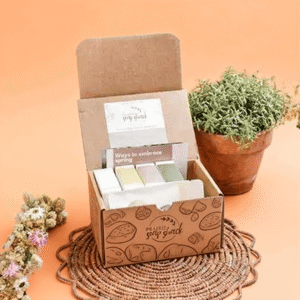

The best packaging for shipping is the box that gets your product from the packing table to the customer’s door without damage, and without adding more freight than necessary. That is a different question from what makes a great product box. A shipping container is judged by strength, fit, and cost per parcel, not by how pretty the outside is. It is not one material either: a folded shirt and a glass carafe have very different shipping needs, and a wrong box shows up later as damage, filler waste, and freight paid to move air.
The shipping box is a different job from the product box
Most packaging mistakes happen because two decisions get merged into one. The product box is the branded surface your customer sees first: the design, the unboxing moment. The shipping container is the workhorse underneath or around it. It absorbs the trucks, the sortation hubs, the doorstep drops. When a brand asks what the best packaging for shipping products is, the honest answer is that the two jobs pull in opposite directions. A beautifully printed carton that crushes under a stack of its own weight is a product box, not a shipping solution. A plain double-wall box that never gets seen is a shipping solution, not a brand asset.
Some structures do both jobs well, and that is the goal. A corrugated mailer box with printed branding survives the network and still looks like your brand when it arrives. Others force a trade-off, and knowing which is which is most of the decision. If the product box is a folding carton that needs an outer shipper, spend the shipping budget there and stop asking the inner carton to do a job it was not built for.
Corrugated is the default, and here is why
Corrugated earns its default position for a physical reason, not a marketing one. The fluted middle layer acts like a spring: it spreads point loads across the whole box, so a stack of forty boxes does not crush the one at the bottom. It takes rough handling better than plain paperboard of similar thickness.
Two flute sizes cover most shipments. E-flute is thin and stiff relative to its weight, the usual pick for lightweight parcels like apparel and cosmetics. B-flute is a step thicker, the standard mid-weight choice. When the product is heavy or fragile, the move is double-wall construction: two flute layers for substantially more crush resistance.
Corrugated also ships flat: the supplier moves dense stacks instead of assembled boxes full of air, and you store it the same way. For most light and mid-weight products, single-wall E-flute or B-flute is the entire answer. The question is never really whether to use it. It is which thickness, and what goes inside.
Match the board to what is inside
The board choice follows the product, and the logic is simple. Light and sturdy goods, folded apparel, dry snacks in sealed packaging, plastic accessories, need the minimum viable strength: single-wall E-flute. Paying for double-wall on a T-shirt means paying to ship extra paper.
Medium-weight items, small electronics, household goods, are where B-flute single-wall lives, and the real variable becomes fit. A medium-weight item in a box two inches too big will shift, rattle, and take impact on its hardest corner every time the truck stops.
Fragile or glass items change the equation entirely. Here the board helps less than the insert does. A glass carafe in a double-wall box with no cushioning still breaks; the same carafe in a single-wall box cradled in a molded pulp or EVA insert survives, because the insert takes the hit. Awkward shapes, bottles, elongated tools, benefit most from a custom die-cut and a form-fitting insert, because rectangular void space is exactly what allows movement. None of these thresholds are universal. Handling and routes vary by carrier, so test your actual shipping conditions rather than guess, and confirm the board with the supplier for your dimensions and weight.
Cushioning is where the protection money should go
The common budgeting error in shipping is spending on the box surface and skimping on the inside. The outside rarely takes the damage that destroys products; the damage comes from movement, and movement happens inside. Fitted inserts beat loose filler on both counts. A molded pulp insert, a corrugated divider, a chipboard or EVA tray holds the product in one exact position, so there is nothing left to move when a box gets dropped. Loose bubble wrap and paper stuffing look like protection but mostly create friction: the product shifts, the filler compresses, and the first real impact lands on the item, not the filler.
Fitted inserts also shrink the box. Build to the product’s dimensions instead of product-plus-padding, and every parcel gets smaller and cheaper to move. That is the part of the protection budget that earns its keep.
Where you should not overspend is on the outer finish of a box that a dozen pairs of hands will touch before a customer sees it. If the printed mailer is also the shipping container, an aqueous coating or an anti-scratch lamination protects the print at modest cost. Premium films are wasted on a surface that will arrive scuffed anyway. Spend on the fit, and protect the print cheaply.
When the mailer does double duty
The cleanest version of this decision is a single box that does both jobs. Corrugated mailers are built for exactly this, and they come in several useful flavors.
Kraft mailer boxes use unbleached board from a blend of virgin and recycled pulp. They are tear-resistant and fully recyclable, strong enough for fragile contents, and the brown surface hides the scuffs a white board would show. White and colored mailers give a clean canvas for full-color printing when the brand needs to be seen outside. Tuck-top mailers add a self-locking closure that keeps the box sealed through the network. Bubble mailers wrap the contents in an integrated air cushion, the right tool for small, sharp-edged items.
Printing scales with your run: offset for high-volume color consistency, digital for short runs and first-time testing, and soy or water-based inks if the eco claim matters to the audience. The double-duty box also removes a step from the packing line, one less box to build, one less layer to pay freight on. For direct-to-consumer brands it is usually the best structure per dollar. Several tuck box styles are built from corrugated fiberboard for shipping and heavier items, worth a look when volume and product weight support it.
The cost side nobody plans for
Unit price is the easiest number to misread, because shipping cost lives outside it. Three line items decide whether a box is actually cheap. First, inbound freight: corrugated ships flat and stores dense, so the per-box cost of moving it from the supplier is low. Pre-assembled structures move air and cost more to get to your warehouse. Second, dimensional weight: carriers price on the space a parcel occupies, not just its weight, so an oversized box bills as a heavier one. A custom size that fits the product plus a thin layer of cushioning is usually the cheapest box available, and the one that protects best: less room for the product to move.
Third, damage. The cheapest box that breaks a product in transit has silently cost you the order: refund, replacement, resent freight, and a customer who does not come back. The math is rarely close. A custom die is a fixed expense spread over your run, so per-unit tooling cost drops as volume rises, and a stock size skips it entirely, which is one reason the first shipment should start simple. Minimum order quantities and production timelines vary by box style and level of customization, so confirm both with the supplier for your specific structure, and ask for a guaranteed in-hands date once the order is placed. These questions belong in the sample stage, not after the run is approved.
Verify before you trust a box at scale
None of the above is a substitute for watching your box survive your actual shipping route. Start with samples in the exact structure, board, and insert you plan to buy; physical prototypes and digital proofs are the cheapest insurance available. Pack the samples the way the packing line will pack them, with the real product and real weight, then send them through the carriers you actually use. Ask recipients to report what the box looks like on arrival: crushed corners, bent flaps, opened seams, product movement.
Drop-test from working height onto a hard surface, three angles at minimum, and stack the boxes for a few days to see what sustained pressure does. If the first test shipment shows damage, the fix is almost always structural, the board, the insert, or the size, rather than cosmetic. Catching it at sample stage costs a sample, while catching it at scale costs an order per incident. Once the structure passes, keep a damage-rate habit: track a few dozen shipments and note every complaint. A rate that creeps up after a carrier or route change is the signal to revisit the box.
FAQ
Is double-wall corrugated always safer?
No. Double-wall earns its extra weight and cost on heavy or fragile items. For light, sturdy goods it mostly means paying to ship extra paper. Match the wall to the product, not to anxiety.
What is the best material for shipping fragile products?
Strong board plus a fitted insert. The board resists crushing. The molded pulp, corrugated, or EVA insert stops the product from moving, which is what actually breaks things. For heavier fragile items, double-wall with a custom cradle is the standard setup.
Can kraft boxes handle real shipping?
Yes. Kraft board is unbleached but tear-resistant, fully recyclable, and safe for direct food contact. The natural surface hides the scuffs a white board would show. Sized and inserted correctly, it carries fragile contents without issue.
How do I choose the right box size?
Start from the product’s packed dimensions, add only the clearance the cushioning needs, and stop. Anything larger bills more at the carrier and gives the product room to move. Custom die-cut sizes remove the excess, which is why a fitted box is usually both the cheapest and the safest option.
What should I expect for minimum order quantity and lead time?
Both vary by box style and level of customization, so there is no single number to plan against. Confirm the MOQ for your exact structure with the supplier, request samples first, and ask for a guaranteed in-hands date once the order is confirmed.
If your product ships direct to customers, start with a corrugated mailer in the right wall, a fitted insert, and a sample run through your real carrier before you commit to volume. The custom mailer box range covers kraft, white, colored, tuck-top, and bubble styles, and custom rigid boxes are the answer when the box itself is part of the product experience and must survive transit as the outer pack. The product boxes catalog is the fastest map of what is available. Send the supplier the product dimensions, packed weight, and shipping route, and the right structure usually takes one conversation to find.