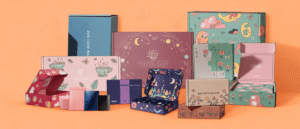

The short answer is a corrugated mailer, and it is the default for a reason. A subscription box has to survive the carrier, hold contents that change month to month, and land in a subscriber’s lap as a brand moment, all at a unit cost that repeats with every cycle. A paperboard gift box looks better in a studio shot and falls apart on a sorting table. So does most of the rest of the menu, if the job is shipping. What follows is how to work through the outer shell, the inside of the box, and the finish, and where each decision puts your money.
Why a subscription box is a different packaging problem
A one-off e-commerce box serves a single order. A subscription box serves the same customer every month, which changes three things at once. First, cost compounds: a small per-box difference is not a one-time expense but a standing line item that repeats with every shipment, so efficiency matters more than it does for a launch package. Second, the box becomes the constant in a system of variables. Your contents rotate, seasons change, hero products come and go, but the subscriber meets the same box each cycle, which means the box has to carry more brand weight per shipment than packaging that appears once. Third, the structure has to tolerate change. If February ships a single candle and April ships three smaller items, the box needs to absorb that swing without a re-spec. Decisions that look trivial in a single order become permanent ones in a subscription, which is why the choices below are ordered by how often they pay you back. The retention math behind why subscribers keep opening a box is covered in our piece on what packaging increases repeat purchases.
The outer shell: corrugated mailer as the default
For the shipping job, corrugated wins on the fundamentals: crush resistance through the carrier network, cushioning for the contents, and a unit cost that a folding carton cannot match at shipping sizes. The mailer box range is built around exactly this, and the style menu maps cleanly onto subscription use cases. A roll end with lid is the lightweight, assembly-friendly option. The roll end tuck front is the full-print workhorse for e-commerce, with customization inside and out. The roll end 3-flap lock adds a triple-flap bottom for mid-weight products and is the style the site itself associates with subscription services and e-commerce deliveries. Board choice follows weight: E-flute for light contents, B-flute when the monthly box gets heavier, and the difference between the two is explained in our cardboard versus corrugated breakdown. Two practical properties decide most of the rest: mailers ship flat from the factory and are assembled at the fulfillment point, which keeps inbound freight low, and they stack in a warehouse without special racking. If the box only needs to be a great shipping box, stop here and spend the remaining budget on the inside.
Match the box to what you actually ship
Subscription formats split into two archetypes with different interior needs. The single-hero format, one skincare item, one candle, one tea, wants a snug fit: the product sits in a sized insert or a tuck box of its own with no room to walk around in transit. The curated multi-item format, a mix of three to five smaller products, is an organization problem first: dividers and trays are what keep the month coherent. The mailer options list the standard answers: corrugated and paperboard dividers, kraft and white board, molded pulp, and EVA or EPE foam for high-value or irregular items, the same menu our custom packaging inserts guide covers in detail. Sizing deserves its own discipline: size the box to your heaviest realistic month, not your average month, because a box that fits the average will fail the season when the catalog gets generous. If your items already arrive in their own retail packaging, the outer shell can be plainer and the money moves into the insert and the presentation layer. The mechanics of getting the size right are in how to choose the right box size.
Where the money should go and where it should not
The most common overspend in subscription packaging is printing the outside like a retail box. The exterior is seen for a few seconds in the studio, hours in transit, and then mostly ignored on a porch. A solid brand color, or a single-color logotype on kraft or white board, does most of the brand work at a lower print cost, because the number of inks drives the price more than the coverage does. The inside is where the subscriber actually spends time, so that is where the spend should go: interior print, tissue, a card slot for the month’s note, an insert that makes the arrangement look deliberate. On the surface finish side, anti-scratch lamination is the pragmatic pick for a box that passes through repeated handling in fulfillment and delivery, and it is the finish the mailer range calls out for subscription and gifting use. Soft-touch and foil are the visible premium signals, and they are worth paying for only when the brand position supports them. On inks, water-based and soy or vegetable inks protect a recyclability claim without forcing a different print quality, which makes them a near-default for subscription boxes that talk about sustainability to their audience. The method-by-method decision is in what printing methods are used for custom boxes.
When a rigid box earns its place
Rigid boxes are a tier decision, not a default. For a low-price or high-volume subscription, a rigid shell is a cost error: it is heavier, it costs more per unit, and if it ships through the mail it usually still needs a corrugated shell around it, so you pay twice. Where it does pay off is the premium tier, high-value skincare, gourmet, fragrance, collectibles, where the box is kept on a shelf and becomes a retention object between shipments. The rigid box range is where that structure comes from: grey chipboard or duplex board as the base, wrapped in textured, metallic, or fabric finishes, with magnetic closures, drawer or sliding openings, and foam, cardboard, or molded pulp inserts. Two structural tricks matter specifically for subscriptions. A belly band lets you change the monthly theme with a printed sleeve instead of a new box. Pockets and card slots carry the story of the month, which is the difference between a container and an experience. Whether a rigid box is worth the step up is walked through in our rigid versus folding carton comparison, and it is worth reading before you quote one.
Keeping one structure alive across twelve months
The cheapest seasonal change in packaging is a print change, and a subscription box is the format where that discipline pays the most. One die, one box size, all year long: the artwork, tissue, card, and insert theme vary month to month while the structure stays fixed. That keeps tooling costs from resetting every season and keeps shipping dimensions flat, which holds the carrier’s dimensional weight predictable, quietly one of the bigger line items in a subscription’s unit economics. The structure gets re-specified only when something fundamental changes: a new weight class, a different item count, or a new premium tier. When that moment comes, test it on a physical sample before committing, because a dimension that looks right on a dieline often behaves differently once the contents are in it. The production side splits the same way. Digital printing suits short seasonal runs and rapid prototyping, while offset suits the evergreen base run where color consistency across hundreds of boxes is what the brand depends on. If the sustainable angle matters to your subscribers, the kraft tuck top range is the reference point for a mono-material monthly box.
Questions to settle before you lock the structure
Before any artwork goes final, six questions should have written answers. What is your heaviest realistic month, in item count and weight? Which carrier network will carry the box, and does the chosen dimension sit inside the standard size classes that keep freight cheap? How many times does the box pass through hands between warehouse and subscriber, because that count decides the surface protection level, not taste? Will the box be kept or recycled, because a kept box can carry premium finishes and a recycled box should keep them minimal? Can you show the supplier your actual contents mix, or at least its heaviest combination, so the quote covers the worst month and not the best? And what are the order minimums and lead times for this specific style and spec, because both vary with structure and customization, so they need to be confirmed with the supplier rather than assumed from a catalogue. The full menu of styles is in the product boxes catalog, and the tuck box family, from straight tuck to auto-lock, is the folding-carton half in custom tuck boxes. A sample answers more of these questions than a spec sheet, which is the single best use of an early budget.
Questions that come up with subscription box packaging
What is the most common subscription box packaging?
A corrugated mailer box, usually self-locking or tuck style. It ships flat, assembles quickly at the fulfillment point, protects contents through the carrier network, and holds its unit cost as volume grows.
Should my subscription box be cardboard or rigid?
Start with corrugated for the shipping job. Rigid earns its place in premium tiers where the box itself is part of the product and subscribers keep it on a shelf between shipments.
How do I stop items shifting inside the box?
Use a custom insert sized to the heaviest monthly combination: molded pulp trays, cardboard dividers, or cut trays. A box sized to the average month will fail in the generous ones.
Is kraft a good default for subscription boxes?
For many brands, yes. It looks finished without heavy coating, is recyclable, photographs well, and a printed kraft exterior still carries a full brand design, which is why it anchors the kraft range.
When should I change the box structure?
When the content mix changes weight class or item count, or when you add a premium tier. For seasonal variety, change the print, tissue, and insert instead of the structure, and test any real re-spec on a sample first.