
Ask a supplier and you will get a brochure: stronger boxes, a better brand, happier customers. All of it true, none of it useful, because every benefit costs money and only some of them earn that money back. The honest answer is that custom packaging pays off in four places. It ships fewer damaged units, it makes the packing line faster and cheaper, it does some of the selling while you are not in the room, and it lets you change the design without starting over. It does not pay off where most brands overspend: premium finishes on products that sell on price, and green claims the material list cannot support. What follows is each benefit ranked by how reliably it shows up in your numbers, with the cases where it quietly does not.
The benefit you actually pay for: fewer damaged units
Damage is the only benefit with a number attached to it. A return caused by a broken product or a crushed corner costs twice, once in the refund and once in the freight to get the box back. Standard boxes are sized for a category, not for your product, and the gap between the two is exactly where the movement that causes damage happens. A custom box removes the gap. The custom tuck box is cut to your dimensions so the product sits tight, and the product page for that line puts the point plainly: sizing tailored to the product reduces movement and damage. Where the product is fragile or high-value, a fitted insert takes over the job. Foam, cardboard, molded pulp, PET trays, and dividers hold the item in one place, and corrugated, kraft, EVA, or EPE dividers do the same inside a mailer. Rigid structures add a second layer of protection, holding their shape against dents and pressure across the route.
The mistake is buying protection you do not need. A product that survives a standard box does not need a rigid build plus three insert layers, and the extra weight and volume get billed by the freight. Match the board to the load, add one fitted insert where the product actually moves, and stop there. This is the benefit to budget for first, because it is the one your shipping numbers will show you within a season.
The unboxing moment, and who actually sees it
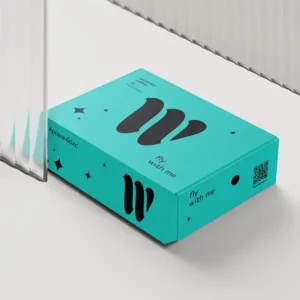
If you sell direct and ship to a door, the unboxing is the only physical brand moment a customer ever gets, and it is the moment they photograph. A custom printed mailer with the brand on the outside, in CMYK or Pantone matched color, turns every delivery into an advertisement that the recipient holds in their hands. The premium end of this benefit belongs to rigid boxes on a hero product: foil stamping, embossing, a soft-touch surface, a magnetic closure, a lined interior. The box has weight in the hand, and for candles, fragrance, and jewelry it is the object people keep: a second ad sitting on a shelf at home.
The catch is audience. Sell through retail or wholesale and the customer never sees your outer box; the unboxing belongs to whoever stocked the shelf. And a product that sells on price reads as a contradiction inside a luxury build, not as an upgrade. The money works when it is concentrated. One excellent unboxing on the product that anchors the brand does more than the same treatment spread across the whole catalog. Everywhere else, a clean printed mailer captures most of the benefit at a fraction of the cost, and the saved money goes to the board and the size, where it earns more.
Shelf presence: packaging that sells without you
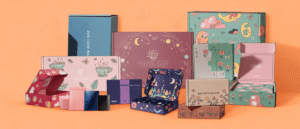
On a retail shelf the box has to sell with no one in the room to explain it, and custom is the part that lets it do that. Off-the-shelf boxes are sized and colored for the category, so two competitors’ products can look identical at arm’s length. A custom box changes the variables that decide which one gets picked: the exact shelf height, a color matched to the brand instead of approximated, a structure that opens cleanly, or a window that shows the product instead of describing it. Display tuck boxes with cutouts and flip-top styles exist for this job, and a kraft box printed in one or two colors reads as intentional rather than cheap when the category around it is loud.
Finishes do the second act. Spot gloss against a matte surface draws the eye to the logo, foil catches the shelf light, and embossing changes how the box feels in a hand. Where the benefit stops is just as clear. A finish nobody can see at arm’s length is decoration of the spec sheet, not the shelf. A design that buries the brand under artwork costs you the recognition the second visit depends on. The box has to be found, then recognized, before it can be appreciated, and the custom budget should spend in that order.
Logistics: the benefit nobody photographs
This is the least glamorous benefit and the most certain one. Standard boxes arrive in sizes that assume a category average, so a brand either ships air, packing a small product into a large box, or fights the box, forcing an awkward fit at the bench. A custom size does both at once. The freight stops billing for volume you do not need, and the bench stops wasting time on a product that does not sit right.
Flat-pack economics matter as much as the size. A corrugated mailer ships flat, stacks dense, and assembles in seconds, which is the whole argument for it in e-commerce. Rigid boxes split the difference: pre-assembled units are bench ready but ship with a lot of space inside them, while flat-folded versions trade a few seconds of assembly per unit for a smaller storage and freight footprint. Assembly speed is a benefit on its own. A tuck end or an auto-lock bottom closes with the hands and nothing else: no tape, no filler, no second layer. Fewer components also means fewer places where something can arrive wrong. Multiply that across every unit you ship and the logistics benefit quietly becomes the largest line in the argument.
Change it when the product changes
A box you own is also a box you can change, and that changes the economics of a rebrand, a seasonal run, or a corrected label. On a folding carton the artwork lives on the board, so a new season or a fixed claim is a reprint of a flat sheet, and digital printing keeps the short re-run viable when the change only touches part of the line. On a rigid box the wrap is a separate printed piece, which makes the graphics cheaper to re-version than people expect. What still costs is structure, because a structural change means a new die, and dies do not come back.
The process is where the benefit is de-risked before any money is committed. A design review, a physical prototype or a digital proof, and sign-off before production starts, with a sample kit so the decision is made on a real object, not argued about in a file. The benefit shows up when the product line moves: names that change, flavors that rotate, claims that get corrected. If your packaging is stable for years, this benefit never pays and you have bought it for nothing. If your line turns over every season, the structure you chose for easy re-versioning will have saved you a die or two, which is exactly the kind of return that is invisible in the brochure and loud in the invoice.
Three benefits that are mostly noise
Three of the benefits sold with custom packaging do not hold up against a line item, and paying for them is the most common overspend. The first is the repeat purchase claim. A box reminds; the product brings the customer back. Paying a premium structure to drive loyalty is spending the protection budget on an opinion.
The second is over-finishing a low-margin product. Soft-touch, foil, embossing, and lamination are separate passes, and each pass carries its own setup, so three finishes on a product sold on price are three costs with no visible payoff at the shelf. The finish budget belongs on the one SKU the brand is known for.
The third is the vague green claim. Kraft is recyclable and safe for direct food contact, water-based and soy inks are real printing options, and the company’s product page lists an FSC chain-of-custody number, SGSHK-COC-330577, which is a claim about the fiber source, not about how the finished box will be recycled. Lamination, foil, and a PET insert each change that story. The honest version of the sustainability benefit is a material breakdown of the specific build, not a word on the lid. Buy the benefits that show up in the numbers and the box pays for itself. The other three cost, and they never appear on the statement.
The questions that come up with this list
Which benefit should I expect first when I switch from standard boxes?
The damage reduction and the faster packing bench. Both show up within the first shipping season, before any brand effect does, because they are mechanical rather than psychological.
Is the brand benefit worth it on a small budget?
Yes, in its cheapest form. A clean Pantone-matched color and one simple logo do most of the brand work. Hold the second finish until the product line justifies it.
Can custom packaging pay for itself on a small order?
It has to, through fewer damaged returns or a faster bench, not through per-unit savings, because the fixed setup costs spread over fewer boxes. Minimums and lead times vary by style and level of customization, so confirm both with the supplier before treating the math as settled.
Do I need a fully custom build to get the protection benefit?
No. A fitted insert in a close-to-standard size solves most of the damage problem. What you give up is the exact size, the flat-shipping efficiency, and the print.
If you want this list with your own numbers on it, start from the four details a supplier needs to price it properly: the product dimensions, the packed weight, the quantity you can commit to, and whether the box ships on its own or inside a carton. You can request a quote with those in hand. The ranking above does not change with the numbers, but the order in which you spend on it does.