
Pick cardboard or corrugated and two different conversations begin. One is about how a box prints and folds. The other is about how it survives a cross-country route. Buyers often treat the choice as a materials question, but it really is a sequence of five practical questions: where the box will live, what it will carry, how far it will travel, what the design demands, and where the budget quietly leaks. Answer them in order and the material usually chooses itself. If you want the full breakdown of how the two boards behave under load and under ink, our piece on the difference between cardboard and corrugated goes deeper. Here is the decision path.
Start with the box’s journey, not the material
Before comparing boards, trace the route. A carton that lives on a retail shelf, moves once from warehouse to store, and then gets handled by customers does mostly presentation work. It must fold clean, close flush, and carry crisp graphics under store lighting. That is the job of solid paperboard, the material behind the tuck box range, with its straight tuck, reverse tuck, snap lock bottom, and auto lock styles. A box that rides trucks, sortation belts, and last-mile vans does the opposite job. It must take drops, stack loads, and days of vibration, which is exactly what the fluted structure of corrugated is built for, in the custom mailer range.
The honest first answer is often both. The shelf box is the brand moment, the shipping box is the survival moment, and they are frequently different pieces of paper. Figuring that out before you ask for a price saves a round of quotes that describe the same box doing two jobs it was not cut for. If your product moves from a warehouse straight to a customer’s door and the box has to look finished on arrival, a printed corrugated mailer can carry both jobs at once, and the second piece of paper disappears from the order.
Weigh the contents and the distance
The second question is what is inside, and how far it goes. The mailer pages list two working flutes for corrugated work, E-flute and B-flute. E-flute is thin and stiff for its weight, the natural pick for light parcels like apparel and cosmetics. B-flute is a step thicker and covers mid-weight goods. Heavy or fragile items step up to double wall construction, which doubles the fluted plies in the wall. Paperboard moves in the opposite direction, where stiffness comes from sheet weight. The quote form on this site carries paperboard from 11 pt (230 GSM) to 24 pt (460 GSM), with heavier rigid stocks up to 1,600 GSM on the rigid box page.
The mistake to avoid is sizing the board to anxiety. A double-wall shipper around a folded t-shirt bills freight on paper the product never needed, and a light 11 pt carton under a dense glass jar creases at the bottom within a week of shelf life. Distance matters as much as weight. The same box that travels five miles on a pallet tolerates far less structure than the identical box that works through a national sortation network. Because handling varies by carrier and by route, confirm the right board and flute against your actual dimensions and packed weight with the supplier, rather than trusting a generic rule of thumb.
Match the print ambition to the board
Third: what is the artwork, and how much of it has to land? Paperboard is a single dense sheet with a smooth face, and that flatness is what fine printing wants. Small type, photographic gradients, halftones, and surface finishes such as soft touch coating, foil stamping, embossing, and spot UV all behave on a solid board. That is why the rigid box page pairs its chipboard base with smooth white face papers that the page describes as built for vibrant, sleek prints.
Corrugated is printed on its liner, and the liner is doing a structural job underneath the ink. The mailer pages offer a kraft liner that is left natural by design, a white liner for a clean, bright face, and a bleached white board for when full-color fidelity has to carry the brand. The step from kraft to white is a real cost, and it is the difference between a two-color logo on brown and a photographic wrap. So the print decision and the material decision are one decision. If the design is a photograph with small text, pay for the smooth face or the white liner. If it is a logo on brown kraft, the default liner does the work and the savings stay in your pocket. The kraft tuck top line exists entirely for the second case, uncoated, recyclable, and built around the natural look rather than against it.
The cost traps of the wrong board
Most budget damage in this choice is invisible at the design stage and loud at the carrier’s invoice. The first trap is thickness creep on paperboard. Each step up the GSM column is more board in the same box, and nobody thinks of a 24 pt carton as heavy until the invoice says so, because the extra weight then rides on the freight bill as actual or dimensional weight. The second trap is oversizing. A box built around the product plus air is bigger than a box built around the product plus fit, and carriers bill the bigger parcel. The third trap is paying for a premium liner on a face nobody sees. The fourth is double protection, where a heavy outer shipper wraps an inner box that already survived the route, so two structures each carry a load the other would have carried alone.
The fix is the same in every case. Size the box to the product first, then let the board follow. A fitted insert inside a right-sized box beats a stronger box with room to move, because the insert removes the movement that causes damage, and the smaller parcel bills cheaper at the same stroke. The money is not in the board family. It is in the fit, the wall count, and the liner grade, in roughly that order.
When the answer is both
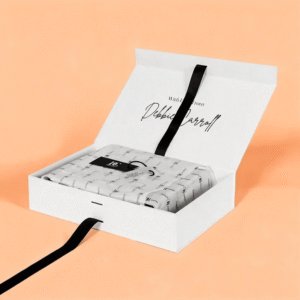
Real e-commerce packages rarely use one board. The standard stack is corrugated outside and paperboard inside. A fluted mailer takes the road while a printed tuck top, sleeve, or insert holds the product still and does the branding at the moment of opening. The mailer pages list corrugated dividers and rigid chipboard dividers side by side, which is the supplier’s version of the same combination. One box, two materials, each doing its own job.
The version worth paying for is the one where the flute carries the transit load and the solid sheet carries the print and the presentation. The version to watch is the one where both carry the same load: a thick mailer around a thick inner box, both oversized, both paying for protection the other already provides. That combination is how a two-material package quietly becomes twice the price of a single-material one. If the budget only allows one upgrade, put it in the outer structure and keep the inner presentation simple. The customer meets the outer box at the doorstep and keeps it, while the inner moment is a few seconds of opening.
What to send the supplier before you quote
By the time you have answered the five questions, the quote request should write itself. Send the product dimensions and the packed weight. Send the route, shelf only, domestic parcels, or export. Send the print ambition, how many colors, whether the face has to be smooth or white, and any finishes. Send the warehouse reality: does the stock arrive flat and get assembled on site, how many boxes will stack on each other, and how long they will sit before use. Corrugated is built to ship flat and stack neatly, a real advantage in a small warehouse, so state the space constraint up front if it exists.
Two numbers to expect when the quote comes back are the minimum order quantity and the production timeline. Both vary by product line, style, and level of customization, and the site’s own FAQ on the product box catalog gives exactly that answer rather than a fixed figure, so ask for both against your specific structure instead of assuming a standard. A sample of the exact setup, same board, insert, and closure, is the cheapest verification step in the whole process, and it settles any remaining argument about which board the product actually needs before the full run starts.
FAQ
How do I know if my product needs cardboard or corrugated?
Trace the box’s route. If it mostly sits on a shelf and needs crisp print and clean folds, solid paperboard is the default. If it rides trucks and sortation belts to a customer’s door, corrugated is built for that load. Many brands end up using both, paperboard inside and corrugated outside.
Can a plain cardboard box ship direct to customers?
It can for light, sturdy items over short routes, but the board has to earn its place. Paperboard is a single sheet, so its protection comes from thickness, and thickness is weight you pay to ship. For most direct-to-door parcels, a printed corrugated mailer does the protection and the branding in one piece.
Is corrugated always more expensive than cardboard?
No. The price follows the structure, the size, the liner, and the print passes more than the family name. A thin E-flute mailer can undercut a thick paperboard box, and a two-color print on kraft liner is one of the cheapest custom packaging setups there is. Compare quotes for the same job, not the same category.
Do I need both materials in one package?
Only if the jobs are different. If the shipping box also has to be the presentation moment, a corrugated mailer with a printed interior or a paperboard insert splits the work. If one board already does both jobs at your product’s weight and route, adding a second material just adds a second cost line.
What should I send the supplier to get an accurate quote?
Product dimensions and packed weight, the destination route, the print ambition including any finishes, and how the warehouse will handle the stock flat or assembled. Ask for the minimum order quantity and production timeline against that exact structure, since both vary by style and customization, and request a sample of the final setup before the full run.