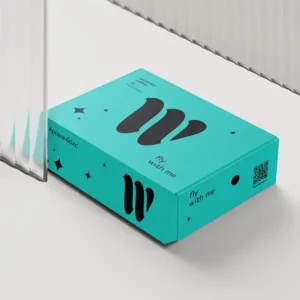

Ask a packaging supplier whether rigid boxes are better than folding cartons and you will get a spec sheet. That is the wrong answer, because “better” only means something once you attach it to a number you are actually trying to move. Perceived value, cost per delivered unit, design longevity, reorder speed: each points at a different structure, and they usually point in opposite directions.
A rigid box is built on thick board and wrapped in printed paper, fabric, or specialty stock. It holds its shape, it gets kept, and it takes finishes thin paperboard cannot. A folding carton is printed paperboard that ships flat, folds up at the packing bench, and costs less per unit at almost every volume.
So the straight answer: rigid is better when the box is part of the product, and folding is better when the box is a line item in your cost sheet. Below is the reasoning, organized around the business questions that settle the choice.
First, decide what “better” is supposed to buy you
This comparison feels endless because each structure is optimized for a different job, and most people ask for a verdict before naming the job. A rigid box buys you a surface. The board is thick enough to wrap in velvet, fabric, linen-textured paper, metallic foil stock, or holographic film, and the wrap takes hot foil stamping, embossing and debossing, spot UV, and foil edging. You are paying for an object that holds up to being photographed and kept.
A folding carton buys you an efficient container that carries print. The artwork is printed directly on the board, offset for volume, digital for short runs, flexo for long economical runs. When you need cushioning instead of stiffness, the structure moves to corrugated, and E-flute or B-flute become the relevant choices.
Neither of those is a quality judgment. Before you choose, write down which axis matters for your product: does the box have to sell, to survive transit, to move cheaply, or to outlive the purchase? The sections below answer in that order.
Is the box part of the sale?
If you sell direct and ship to a door, the unboxing is the only physical brand moment a customer ever gets, and that is where rigid boxes pull ahead. The lid lifts, the box has weight in the hand, and the wrap does talking that print alone cannot do. A magnetic closure with a foil-stamped logo and a molded pulp insert reads as a different price tier before anyone reads the label.
Here is where the money should go. Rigid works hardest on the SKU that anchors your brand’s price: the flagship product, the gift tier, the line customers photograph. One excellent rigid box on that product does more for the rest of the catalog than the same treatment spread thin across everything.
Here is where it should not go. Extending the same rigid build to a low-margin, high-velocity product means paying premium structure costs on units that never carry the message. A folding carton with spot UV and a soft-touch coating still reads premium on a shelf from three feet away, at a fraction of the per-unit price. The practical split: rigid on the hero product, folding for the working catalog.
Does the box travel as the shipping package?
This question splits the decision in two directions. In the first, the box is the shipping unit, leaving your dock straight into the courier network. A rigid box with an insert, foam, molded pulp, a PET tray, or simple dividers, can be the entire package. Fewer layers means fewer points of damage, and the customer opens the real product packaging instead of peeling through a second box. Anti-scratch coatings exist precisely for this use case.
The catch is volume. Pre-assembled rigid boxes move a lot of air, and freight bills on volume. Flat-folded rigid boxes cut storage and shipping footprint, at the cost of a few seconds of assembly per unit.
In the second direction, the box sits inside a shipper. For light products, cosmetics, supplements, tea, small accessories, that is the classic setup: the folding carton holds the product and carries the print, and a corrugated mailer handles the protection. There is also a third option people skip: a mailer that is itself the shipper, one piece, with the print on the outside. If your product is light and your margin is tight, a mailer usually beats both structures on cost.
How each structure lands on your cost per delivered unit
Unit price is the number everyone quotes, and rarely the number you actually pay. Three things decide the gap. The first is setup, a fixed die and pre-press cost spread across the run. The second is wrapping labor, unique to rigid boxes: a carton comes off the line flat and glued and is done, while a rigid box has to be wrapped by hand, and that labor takes a much bigger share of the price on small runs. That is why rigid quotes start higher but fall faster as volume grows.
The third is freight and storage, the factor that surprises people. Flat cartons stack dense; assembled rigid boxes take warehouse space and shipping volume, bulky or not. Run the comparison on landed cost per delivered unit at the quantity you will actually order, including where stock sits until you need it.
One more cost to check before you commit. Reorders re-pay the setup sensitivity: a structure with heavy wrapping labor punishes small top-up batches more than one that prints and glues in a single pass. If your buying pattern is many small orders rather than one big one, the math tilts toward folding. Minimums and lead times depend on the exact style and level of customization, so get both structures quoted on your real quantity before treating any of this as settled.
How fast do you need to reorder or change the design?
Design changes expose a difference the first order never shows. On a folding carton the artwork is on the board, so a seasonal version, a label fix, or a color refresh is a reprint of a flat sheet. On a rigid box the wrap is a separate printed piece, so re-versioning the graphics re-runs the wrap, and a structural change means a new die. Digital printing keeps short runs viable on both, which is what makes the carton-side changes so cheap to do.
Inventory posture is the other half of speed. Flat cartons store dense, so a small unit holds a long runway of stock in a corner. Rigid boxes arrive pre-assembled, which is simpler at the packing bench, or flat-folded, which saves space but adds assembly time per unit. The choice is a trade between bench time and floor space.
One more speed question: how fast can you react when a product changes? If your SKU line is stable, the re-version cost is a one-time consideration. If products, labels, or claims change often, keep the changeable parts on the structure where changing is cheap, and reserve the expensive structure for the product that stays the same. Production timelines vary by style and customization level, so confirm them against your schedule before you book the run.
What happens to the box after it is opened?
The last question is also the first one customers actually live with. Does the box get kept, or does it go to the bin the same day? If it is kept, the box becomes a second ad: it sits on a shelf at home, it stores the product next time it is used, and for candles, fragrance, jewelry, and gift sets it can be the thing people photograph. That is the entire economic case for rigid in one sentence.
If the box is tossed, you are paying for durability nobody wanted. Both structures are paper-based and widely recyclable, so the honest move is to pay less for the part that gets thrown away. Folding cartons, and kraft versions of them, are the clean answer there. Kraft tuck top boxes run from 8 pt to 28 pt in board weight, are fully recyclable, and handle one or two color prints that read as intentional rather than cheap.
The complication is always the attachment, not the box. Lamination films, holographic wraps, foam inserts, and PET trays all change whether a pack moves through a single recycling stream, while a paper wrap with a molded pulp insert is the straightforward combination. If sustainability is part of the brief, ask for the material breakdown of the specific build. The board at ipackingbox.com is FSC-certified under SGSHK-COC-330577, a chain-of-custody claim about the fiber; know what it covers before any recycling logo goes on the box.
Questions people ask with this one
Can I run both structures in one product line?
Yes, and it is the most common setup once a brand matures: rigid on the hero SKU or gift tier where the unboxing does the selling, folding cartons across the standard catalog where cost per unit does. Sharing one brand system, the step up to rigid reads as intentional rather than inconsistent.
Is a rigid box worth it for a first order?
Usually not, unless the product itself is the brand. A first order on a rigid structure pays wrapping labor per unit where it costs most, plus a bulkier freight footprint. The cheaper experiment is a folding carton on the same product, with a physical sample of the rigid version. Pack both, handle both, then decide what the extra spend actually buys.
Does flat-folded rigid close the shipping-cost gap?
It closes part of it. Flat-folded rigid boxes take far less storage and freight volume than pre-assembled ones, which is the reason the option exists. The trade is assembly time on the packing bench, a few seconds per unit that adds up on a line. If the box also ships as the package, ask whether those seconds are cheaper than the second layer you would otherwise add.
Which structure ages better when I change the design?
Folding cartons, for the simple reason that the artwork is on the board. A seasonal version or a label correction is a reprint of a flat sheet. On a rigid box the wrap is a separate piece, so re-versioning re-runs the wrap, and a structural change means a new die. If you change designs often, keep the changeable parts on the structure where changing is cheap.
If you are weighing the two for a specific product, ask for both structures quoted on the same brief: product dimensions, packed weight, the quantity you can commit to, and whether the box ships on its own or inside an outer carton. Those four details let a supplier price both sides accurately on the first pass. You can request a quote whenever you are ready.