
Paperboard and cardboard are often used as if they mean the same thing. In packaging work, that shortcut can produce the wrong box. Paperboard usually means a solid sheet made for folding cartons, sleeves, inserts, and retail packs. Cardboard is a broader everyday word that may refer to solid board, chipboard, or corrugated board. The useful answer is not a dictionary definition. It is knowing which construction will print well, hold its shape, protect the product, and fit the way you store and ship it.
For most retail cartons, specify solid paperboard and give the thickness or GSM. For a shipping mailer, specify corrugated board and the flute. For a premium rigid package, specify rigid board and the wrap. That level of detail makes quotes comparable and prevents a material name from doing too much work.
Paperboard and cardboard describe different levels of detail
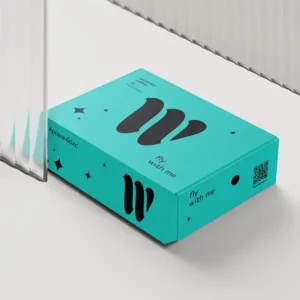
Paperboard is a material category: paper fibres pressed into a relatively solid, flat sheet. A folding carton is printed, die-cut, creased, folded, and usually glued from that sheet. Its performance comes from board thickness, density, the panel layout, and the folds that add stiffness. It gives a smooth face for type, illustrations, product photography, and brand colour.
Cardboard is less precise. A customer may use it to mean any paper-based box, while a supplier may understand it as corrugated board or thick grey board. That gap matters because 300 GSM solid paperboard, E-flute corrugated board, and 1,200 GSM rigid board are not interchangeable products. They have different print surfaces, storage requirements, and resistance to crushing.
A good packaging brief therefore avoids “cardboard” as the final specification. Say “solid paperboard folding carton” if the box will arrive flat and fold around a light product. Say “E-flute corrugated mailer” if the package needs cushioning and direct-shipping strength. Say “rigid grey chipboard box wrapped in printed paper” if the box must hold its form and create a keepsake presentation. The broader word is fine during an early conversation, but the construction should be settled before a quote or sample is approved.
Solid paperboard is built for printed folding cartons
Paperboard is usually the right starting point for a product box that sits on a retail shelf or inside a separate shipping carton. The product-box range lists paperboard from 11 pt or about 230 GSM through 24 pt or about 460 GSM. The lower end can suit a small, light product that already has an outer shipper. A heavier grade may be worth paying for if a larger panel bows, a window weakens the face, or the carton must stand upright during display.
Thickness is not a substitute for structural design. A well-designed tuck box can outperform a thicker sheet with a poor closure, narrow glue area, or unsupported span. The die-line, crease placement, panel size, and product weight all affect the result. Ask for a folded sample with the actual product inside rather than choosing board only from a number on a quotation.
Surface choice changes the visual result too. Coated white paperboard supports crisp small type and strong colour reproduction. Kraft paperboard has a warmer base and visible fibre texture, so ink appears different from the same artwork printed on white stock. A physical proof is sensible for dark colours, fine lines, and large solid areas. The product boxes page is the useful place to compare board, printing, coating, finishing, and insert options before finalising a carton.
Corrugated board is cardboard with a fluted structure
Corrugated board is the construction most people picture when they say cardboard shipping box. It combines flat liner sheets with a fluted paper layer between them. The flutes create air space and a column-like structure, which helps the board resist crushing and gives it cushioning that a solid sheet of the same weight does not provide.
Flute size changes how the package behaves. E-flute is relatively fine, so it gives a smoother print face and folds neatly around a branded mailer. B-flute is taller and generally offers more cushioning and stacking strength, although its surface is less smooth. The correct choice depends on the parcel route, product weight, panel size, and how much print detail needs to remain clean.
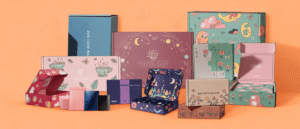
That makes corrugated a different tool from paperboard rather than a thicker version of it. A folding carton is good at carrying graphics and organising a light product. Corrugated is good at absorbing handling and protecting a product in transit. A mailer box may combine both roles: its fluted wall supplies protection while its outside carries the brand. The mailer box range shows why the structure should be specified by use, not simply by the word cardboard.
If the product is fragile, pack a production sample in the proposed flute and test the real route as closely as possible. A stronger flute may be useful, but it also adds material, weight, and sometimes a rougher print surface. Spend on protection where the package needs it, not across every panel by default.
Rigid board is another meaning hidden inside cardboard
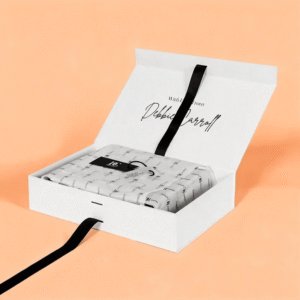
Rigid boxes use a thick board base that does not fold like a retail carton. The rigid-box range describes grey chipboard, duplex board, SBS paper, and kraft as base options, with board commonly specified around 800 to 1,600 GSM. The base supplies stiffness. A separate wrap supplies the visible colour, texture, and finish. That is why a rigid package can use metallic foil paper, holographic film, textured paper, fabric, or velvet in ways that are less practical on a standard folding carton.
The distinction has a direct effect on handling. A rigid box arrives pre-assembled or in a collapsible form, so it takes a different amount of storage space from a flat folding carton. It also tends to support more elaborate closures and inserts, such as magnetic strips, ribbons, foam, molded pulp, cardboard, or PET trays. Those additions may be justified for a gift set, jewellery, electronics, or a product that is expected to be kept. They are difficult to justify if the box is opened once and discarded.
Rigid board is not automatically better. It is heavier, bulkier, and more involved to manufacture. If the product already travels inside a protective shipper and the customer mainly needs a clean shelf carton, solid paperboard may deliver the same selling job for less material and less freight volume. If the package itself is part of the gift or unboxing experience, the extra structure can earn its cost. The custom rigid boxes page lays out the material, wrap, coating, finish, insert, and add-on choices separately, which is the right way to compare them.
Printing and finishing reveal the material difference
A solid paperboard sheet gives the printer a stable, relatively smooth surface. That makes it suitable for product photography, small text, barcodes, and detailed colour work. Offset printing is a common fit for sharp premium graphics, digital printing is useful for short runs or changing artwork, and flexographic printing is suited to high-volume work. The best process depends on the artwork, run size, and required consistency, not on the word “cardboard.”
Corrugated board can also carry strong graphics, but the flute and liner affect the finish. A fine flute gives a cleaner face. A larger flute is more forgiving in transit but can make a small type line or photographic detail appear less precise. If the outside of a shipping box needs a premium retail look, ask for a sample at the actual size and flute rather than judging from a flat artwork proof.
Rigid boxes move the visible print onto the wrap. That opens the door to foil stamping, embossing, debossing, spot UV, textured paper, metallic paper, and soft-touch surfaces. Each adds a separate cost and can change recyclability or scuff resistance. Spend first on the surface that customers touch and see. A complex finish on a box that arrives dented is money spent in the wrong order. For a natural paper direction, the kraft box page is a relevant reference for comparing the look of kraft-based packaging with more heavily treated surfaces.
Choose the construction by the job, not the label
Start with the product and the journey. A small cosmetic, tea pack, soap, or accessory that sits in a shipping carton may need a printed paperboard folding carton. A direct-to-customer parcel may need E-flute or B-flute corrugated board because the wall has to absorb handling. A premium gift set may need rigid board with an insert because the box is part of the presentation and may be stored after opening.
Next, decide what can be sacrificed. If storage space is tight, a flat folding carton has a clear advantage. If product damage is expensive, put more of the budget into the board structure and insert before adding decorative effects. If the box will be recycled quickly, avoid paying for a heavy build or several attached components that add little to the customer’s experience. If the box is meant to be kept, a durable wrap and a closure may matter more than an extra layer of board.
Use this simple comparison when briefing a supplier:
| Requirement | More likely fit | Why |
|—|—|—|
| Crisp retail graphics and flat storage | Solid paperboard folding carton | Smooth print face and efficient storage |
| Parcel protection and cushioning | Corrugated E-flute or B-flute | Fluting adds crush resistance and protection |
| Premium keepsake presentation | Rigid board with a wrap | Holds shape and accepts richer surface materials |
| Natural appearance | Kraft paperboard or kraft wrap | Visible fibre and warmer colour |
| Organised multi-piece pack | Paperboard, corrugated, or rigid structure with inserts | Insert choice controls movement and presentation |
The right answer can be a combination. A paperboard product carton inside a corrugated mailer often makes more sense than forcing one box to be both a display package and a shipper.
How to specify paperboard or cardboard without confusion
A useful specification names at least six things: construction, board or flute, dimensions, print surface, finish, and insert. “Custom cardboard box” names only a general category. “Solid paperboard folding carton, 300 GSM, reverse tuck end, coated outside, matte finish, cardboard insert” gives a supplier something measurable. For shipping, add the flute and the expected product weight. For a rigid box, name the base board, wrap, closure, and whether it must arrive assembled or collapsible.
Ask for the sample before approving production artwork. Check the folded dimensions, closure, glue line, edge cracking, print registration, colour on the chosen stock, and the fit of the product or insert. For a mailer, test the packed box rather than an empty shell. For a rigid box, open and close it repeatedly and inspect the corners, wrap, and lid alignment.
Also ask the supplier to separate material and finishing choices in the quotation. That lets you remove a coating, change an insert, or move from rigid to folding construction without losing track of what changed. Specifications and production details depend on the style and degree of customisation, so confirm the final requirements with the supplier rather than relying on a general promise.
A clear brief saves more money than a vague request followed by several revisions. It also gives you a fair comparison between paperboard, corrugated, and rigid options. The goal is not to choose the heaviest material. It is to choose the simplest construction that protects the product and does the brand job properly.
Frequently asked questions
Is paperboard stronger than cardboard?
Neither word identifies one fixed strength level. Paperboard is a solid sheet, while cardboard may mean paperboard, corrugated board, or rigid board. A solid paperboard carton is suitable for many light retail products. Corrugated board is usually the better choice for cushioning and parcel handling because its fluted layer adds structure. The correct comparison needs the material, thickness or flute, box dimensions, and product weight.
Is corrugated board the same as paperboard?
No. Paperboard is normally a solid sheet. Corrugated board is made from liners and a fluted layer. Paperboard generally gives a smoother print face and cleaner folding-carton finish. Corrugated board generally offers better protection against crushing and handling. Some packages use both: a printed paperboard carton for presentation and a corrugated shipper for transport.
Which material is best for a premium product box?
Rigid board is often the strongest fit when the box itself is part of the premium experience. It holds its shape and can be wrapped in printed paper, metallic paper, textured stock, fabric, or velvet. A well-designed paperboard carton can still look premium on a shelf and may be the better choice if the box will be discarded or must ship flat. Choose after considering use, storage, freight, and the customer’s reason to keep the box.
What should I tell a packaging supplier?
Give the supplier the product dimensions and weight, the box’s job, the shipping route, the preferred construction, the print requirements, the finish, and the insert requirement. Ask for a physical sample made with the proposed board or flute. Avoid using “cardboard” as the only specification because it can describe several different constructions.